Measures of Central Tendency
Although the mean is perhaps the most common measure of central tendency of a distribution by virtue of its stability, it is not the only one.
Other measures of central tendency can also be useful, particularly in cases of asymmetrical distributions. Two of the most common of these are:
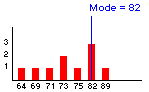
- Mode: The mode or "most likely" value of a distribution is represented by the highest point of the frequency distribution curve.
- Median: The median value of a distribution divides the area under the curve into two equal parts.
For symmetrical probability distributions arrived at theoretically, calculations of the mean, mode, and median values produce identical results.
Mean Value
The mean value (traditionally represented by the symbol m) is a measure of the central tendency of the distribution and is more or less synonymous with the more colloquial terms average and expected value. The mean is calculated as follows:
where:

|
is the mean |
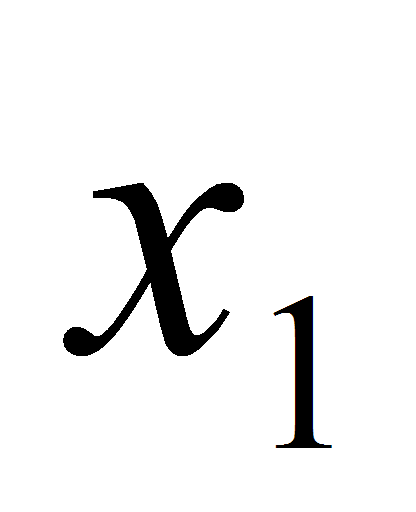 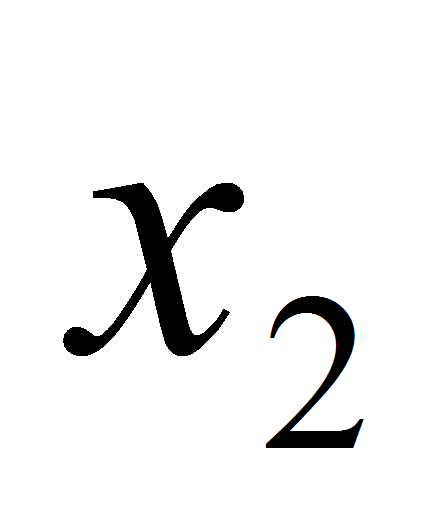
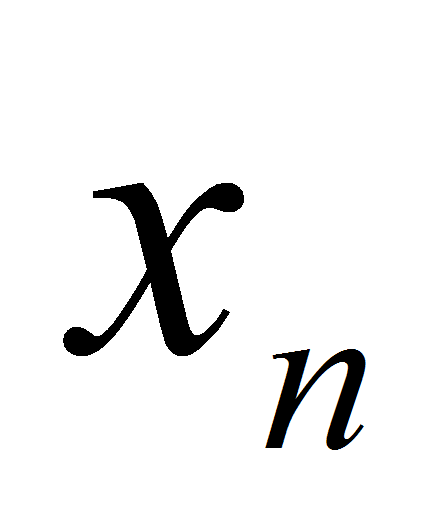
|
are outcomes |
| n | is the total number of outcomes |
For probability distributions based on sampling, the mean is considered to be the most reliable statistical indicator of the central tendency because it takes into account all the outcomes sampled.
Examples
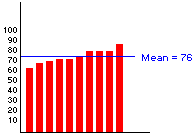
Assume that ten students taking a math test receive the following scores:
64, 69, 71, 73, 73, 75, 82, 82, 82, 89
You can graph these outcomes and calculate the mean:
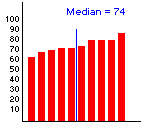
The median outcome is 74 because five students scored below and five scored above this value. It does not matter that no student actually scored 74.
To see the mode, it is necessary to plot how frequently each score was received: