Coding Structures in Open Plan
Coding systems typically describe some type of hierarchy of project information.
The types of hierarchies that can be represented by coding structures can be work breakdown structures, organizational breakdown structures, or any other classification that can be represented by a hierarchy. By assigning codes based on breakdown structures to various project elements, you can summarize project and resource data to appropriate levels for specific reporting requirements.
A particular breakdown structure can be used with more than one project. This might be the case, for example, if a number of projects were being performed by the same organization and therefore could share the same organizational breakdown structure. As a result, Open Plan does not force you to define coding systems that are project- or resource file-specific. Instead, you can define a code file that is independent of a particular project or resource file and associate it with subsequent projects or resource files as needed.
Codes in Open Plan can use one of two types of self-defining coding systems: punctuated significant codes and fixed-form significant codes. The term “self-defining” refers to the ability to determine where an individual element appears in the hierarchical structure by inspecting the element’s code.
- Punctuated Significant: In punctuated significant codes, a period is used to separate the part of the code that corresponds to the different levels in the structure. Apart from the top-level code, each code is based on the name of its parent. The maximum number of levels for a punctuated significant code file is limited only by the total characters in a row, which is limited to 59.
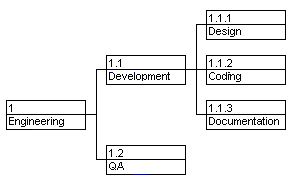
The following figure shows an example of part of a punctuated significant coding system. In this example, 1.1.2 is a child of 1.1, which is a child of 1.
- Fixed Format Significant: In fixed-format significant codes, the length of the code represents the structure level. Apart from the top-level code, each code is based on the name of its parent. The maximum number of levels for a Fix Format code file is 10.
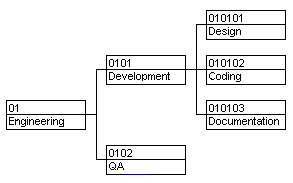
The following figure shows an example of part of a fixed-format significant coding system. In this example, 010102 is a child of 0101, which is a child of 01 and higher-level codes use spaces as “pad characters” that fill out each code in the system to the same length.
In both types of coding systems, higher-level codes are referred to as "parent" codes. All lower-level codes that are directly or indirectly connected to a particular parent may be called descendants or "children" of that code. When a report is produced at a particular level, all data associated with that code itself or with any of its descendants are summarized, or "rolled up," into a single set of data.
If the Full ID option is selected on the Options tab of the Code Display Preferences dialog box, you can tell just by inspecting a code where it should appear in the structure.