Cost and Schedule Variances
After the principal elements of cost control are established, two important variances can be calculated: cost variance and schedule variance.
Open Plan calculates cost variances by subtracting ACWP from BCWP.
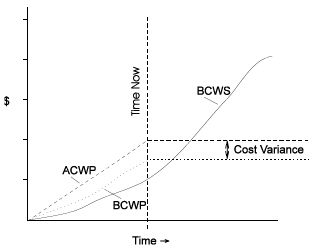
Using this formula, a positive value indicates a "favorable" cost variance because it means that the actual cost of the work performed was less than was budgeted. Similarly, a negative value represents an "unfavorable" cost variance because it means that the actual cost of the work performed was more than was budgeted.
Open Plan calculates schedule variances by subtracting BCWS from BCWP.
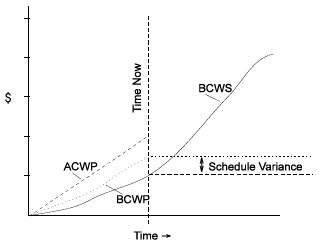
As in the case of cost variances, a positive value represents a "favorable" schedule variance, while a negative value indicates an "unfavorable" schedule variance.
The link between the two variances is BCWP or earned value, which is used as the starting point for both calculations. Using BCWP in this manner makes it possible to measure schedule variance in terms of cost (for example, dollars) or hours. This may seem strange, but this value gives a convenient summary of the budget, actual cost, and project status in numbers that can be compared to each other. Keep in mind, however, that this approach is not a true alternative to critical path scheduling for measuring the likely impact of potential delays since the amount budgeted for particular activities may or may not accurately reflect the importance of those activities to the overall schedule of the project.
Related Topics
- Managing Costs Overview
- Cost Forecasting
- Cost Control Features in Open Plan
- Understanding Open Plan Cost Calculations
- Earned Value Cost Control
- Using the Progress Calculations Dialog Box
- Histogram Preferences Earned Value Tab
- Viewing Cost and Earned Value Data
- Displaying Earned Value Information on a Resource Histogram